OpenConversations ; When Validation Isn’t Enough: Navigating the Edges of Empathy
June 12, 2025
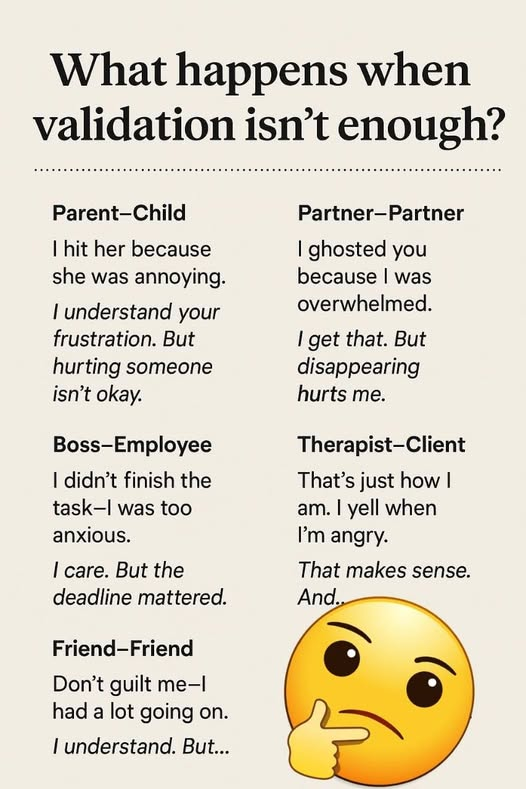
When Validation Isn’t Enough: Navigating the Edges of Empathy
In many relationships, whether personal or professional, we encounter this paradox:
“Please understand why I did that.”
“Okay, I hear you.”
“But don’t question me or suggest another way.”
“...Then why are we still stuck?”
Validation is essential. It softens shame, opens trust, and lays the groundwork for safety. But validation *without reflection* becomes a cul-de-sac. When someone seeks empathy but resists dialogue, accountability, or mutual impact, it creates emotional gridlock.
Here’s what that looks like across different relationships:
Parent–Child:
Child: “I hit her because she was annoying.”
Parent: “I understand your frustration. But hurting someone isn’t okay, let’s find other ways to express anger.”
If only the frustration is validated, but harm isn't gently addressed, the child feels seen but doesn't grow.
Partner–Partner:
Partner A: “I ghosted you because I was overwhelmed.”
Partner B: “I get that. But disappearing hurts me.”
If only one emotional truth is allowed in the room, connection breaks down.
Boss–Employee:
Employee: “I didn’t finish the task, I was too anxious.”
Boss: “I care about that and want to support you. But the deadline mattered. Let’s plan better next time.”
Support doesn’t mean removing all expectations. Compassion isn’t a substitute for structure.
Therapist–Client:
Client: “That’s just how I am. I yell when I’m angry.”
Therapist: “That makes sense. And… would you be willing to explore where that pattern comes from?”
Therapy stalls when we confuse validation with approval, or kindness with agreement.
Friend–Friend:
“I disappeared again, but don’t guilt me, I had a lot going on.”
“I understand. And it still hurts to feel dropped.”
Friendship needs room for both truths: your overwhelm and my hurt.
So What Do We Do When Validation Hits a Wall?
Sometimes, what’s beneath the resistance is:
• “I’m afraid if I admit fault, I’ll be blamed.”
• “I need to feel right to feel safe.”
• “I want connection, but only on my terms.”
In these moments, the work is to gently name the pattern, not with blame, but with curiosity.
Because validation is the soil, not the fruit.
Compassion is the doorway, not the destination.
And growth begins where empathy meets accountability
Have you ever experienced this, either from the receiving or the giving end? How do you handle situations where someone wants to be understood, but resists any reflection on their actions?

