Bullying
October 15, 2025
Hats off to schools that are willing to open up uncomfortable conversations and give young people a safe, non-judgmental space to speak.
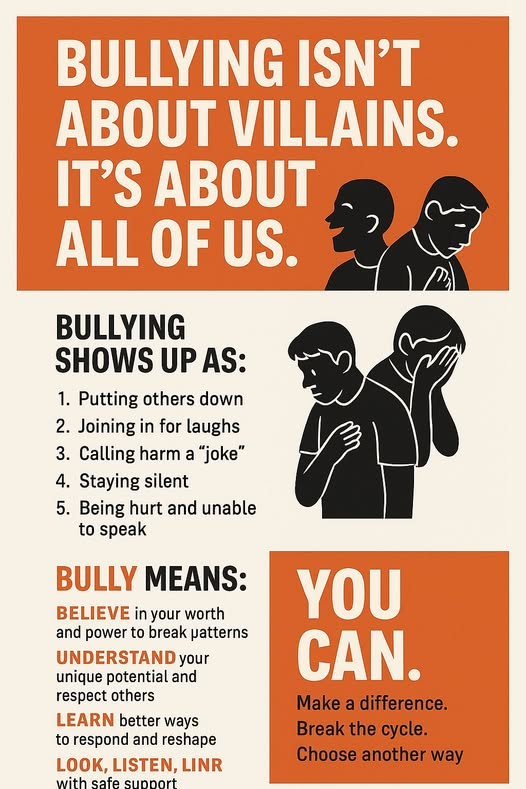
The reality? We’re all part of it in some way or the other. Not villains. Not heroes. Just people who’ve played roles we didn’t always choose or understand.
Suspension or dismissal might feel like a quick fix, but it says more about the institution than about the child who needed help. If blame and shame are already a daily curriculum at home and in school, it’s not hard to see why bullying festers. Respect is still too often framed as something children “owe” adults, not something they equally deserve.
We've all probably been in one of these five positions
Actively putting someone down.
Joining in for the laughs.
Dismissing harm as a joke.
Staying silent even when you know it hurts.
Being the one harmed but unable to speak.
We too can become a BULLY by...
B – Not believing in our worth or power to break patterns.
U – Not understanding our unique potential or respecting difference.
L – Not learning that we can shift the situation.
L – Not looking, not listening, not linking with someone safe.
Y – Not yet believing we can make a difference.
Children’s questions reminded me why these conversations matter:
– Were you ever bullied, and how did you handle it?
– Is it okay to be an introvert?
– Why call it “anti-bullying” if bullies aren’t bad people?
– How do we help if the person doesn’t want to talk?
– What do we do when the bully is in our own head?
The wisdom in these questions? That bullying is never just about “them.” It’s about all of us.

