
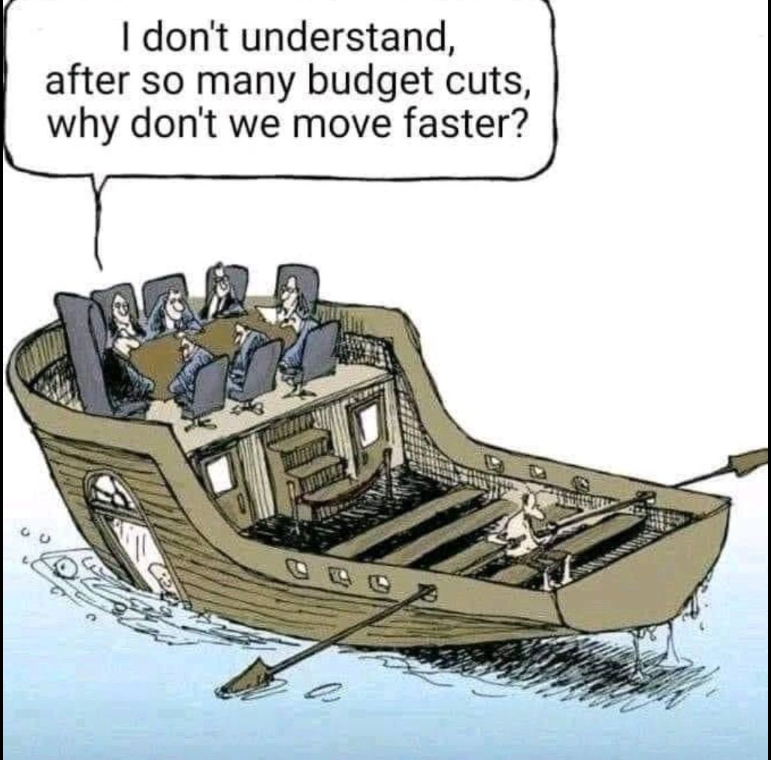
#OpenConversations #makinglivedexperiencesmatter When decision-makers sit comfortably at the table, far from where the real labour happens, they often mistake exhaustion for inefficiency. This image isn’t just about budget cuts, it’s about how systems forget the human cost of their “efficiency drives.” The people at the oars are the ones who feel every new directive, every policy shift, every resource cut, in their daily fatigue. When making policies that affect children with disabilities, the people rowing are the families, the teachers, the therapists, and the few who stay close to the child’s lived reality. Yet, policies often assume that teachers and parents can somehow “make inclusion happen” without support, resources, or time. In schools, teachers are asked to do everything, plan lessons, attend meetings, track attendance, organize annual days, trips, health check-ups, sports days, club activities, house duties, “special days,” and sometimes even fee collection. Each new task is layered onto an already overstretched day, leaving little space to observe, understand, or respond meaningfully to a child’s needs. When teachers are not supported, inclusion becomes a checklist instead of a culture. The emotional and logistical load trickles down, teachers burn out, parents lose trust, and children get labelled as “challenging” rather than recognized as needing a responsive environment. Inclusive education cannot thrive on policy statements alone. It needs consistent implementation, smaller classrooms, co-teaching models, emotional support for educators, and structured collaboration between teachers, therapists, and families. If the people rowing are exhausted, the ship won’t move, no matter how many meetings are held at the deck.
