being truly heard
August 11, 2025
Most of us think we’re listening… but we’re actually shutting people down. We’ve all been there, nodding politely while waiting for our turn to speak.
But being truly heard? That’s different. It can change someone’s whole day , maybe their life.The problem? In mental health, disability, and education spaces, we often get validation wrong.
Two myths we need to bust:
1. Validation means agreement. Nope, we can acknowledge someone’s reality without endorsing their opinion.
2. Talking about feelings makes them worse. In truth, bottling them up does more harm.
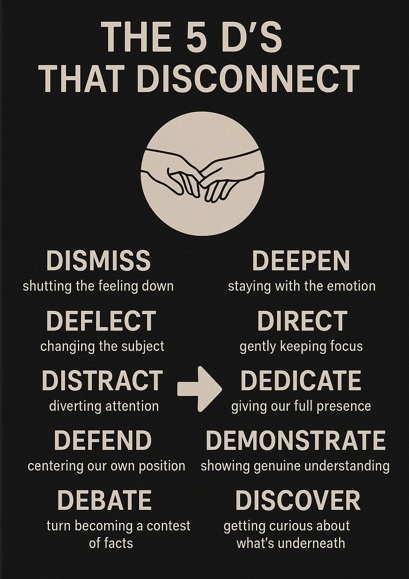
The 5 D’s That Disconnect
When someone’s vulnerable, we might:
#D ismiss – shut the feeling down
#D eflect – change the subject
#D istract – shift attention away
#D efend – centre our own position
#D ebate – turn it into a contest of facts
We often mean well… but these close the door.The child says, “I hate school, it’s useless.”
The 5 D’s sound like this:
Dismiss: “Don’t talk nonsense, school’s important.”
Deflect: “Let’s talk about dinner.”
Distract: “Did you see the new game I bought?”
Defend: “I work hard to send you to school, so appreciate it.”
Debate: “Statistics show school helps people succeed.”
Every one of these shuts the door. They reject, sidestep, or challenge the emotional reality the child is trying to share. Instead: “Sounds like you’re frustrated and questioning its value. Tell me more.” Notice , I didn’t say, “Yes, school is useless.” That would be agreement, not validation. Validation is reflecting the feeling… and inviting the conversation forward.
Dismiss → Deepen — Stay with the emotion
Deflect → Direct — Keep gentle focus
Distract → Dedicate — Give full presence
Defend → Demonstrate — Show understanding
Debate → Discover — Get curious about what’s underneath
When we swap the 5 D’s That Disconnect for the 5 D’s That Deepen, trust grows. True listening says: “You matter. Your voice matters. We’re here to hear you.”

