

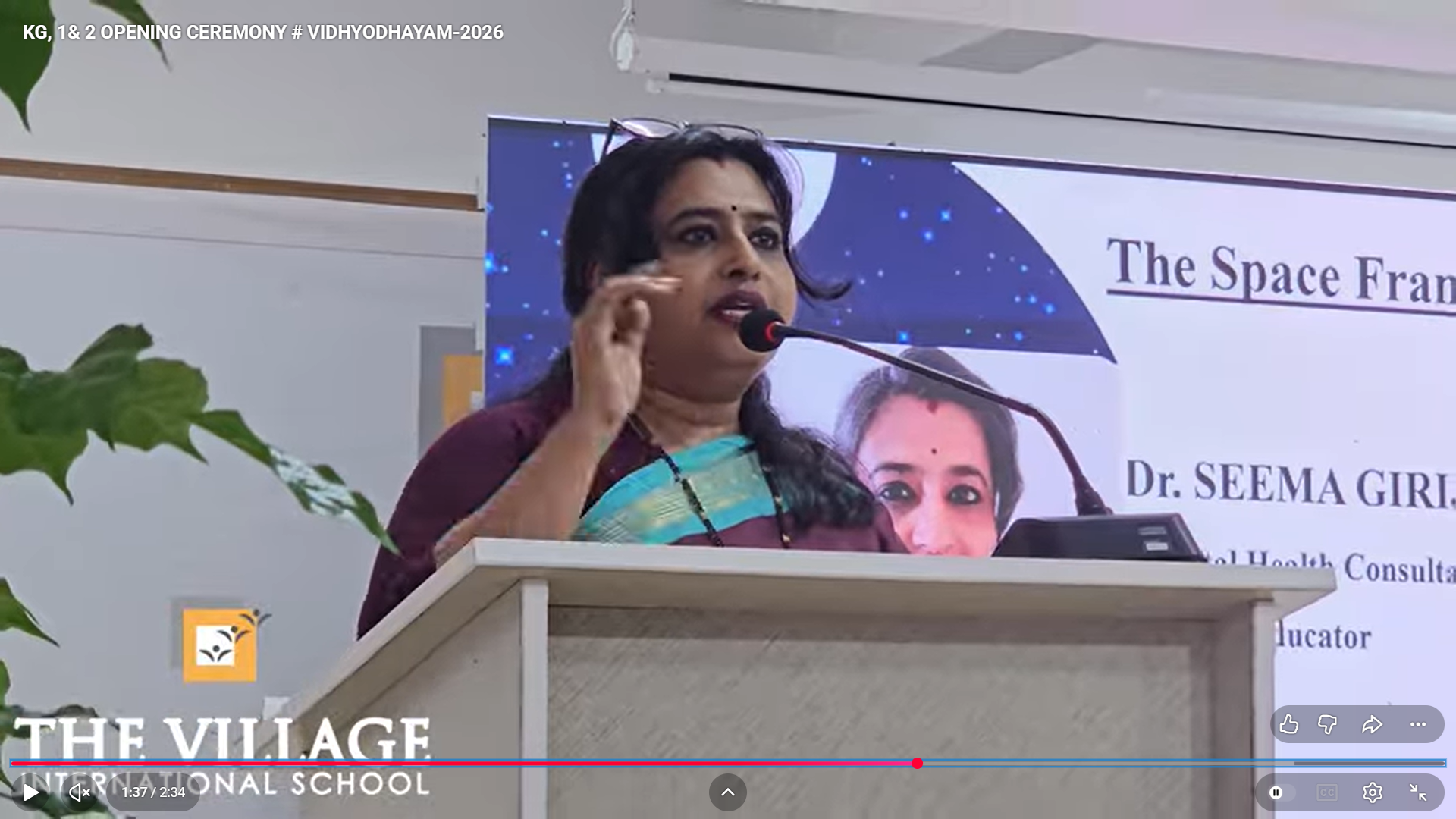
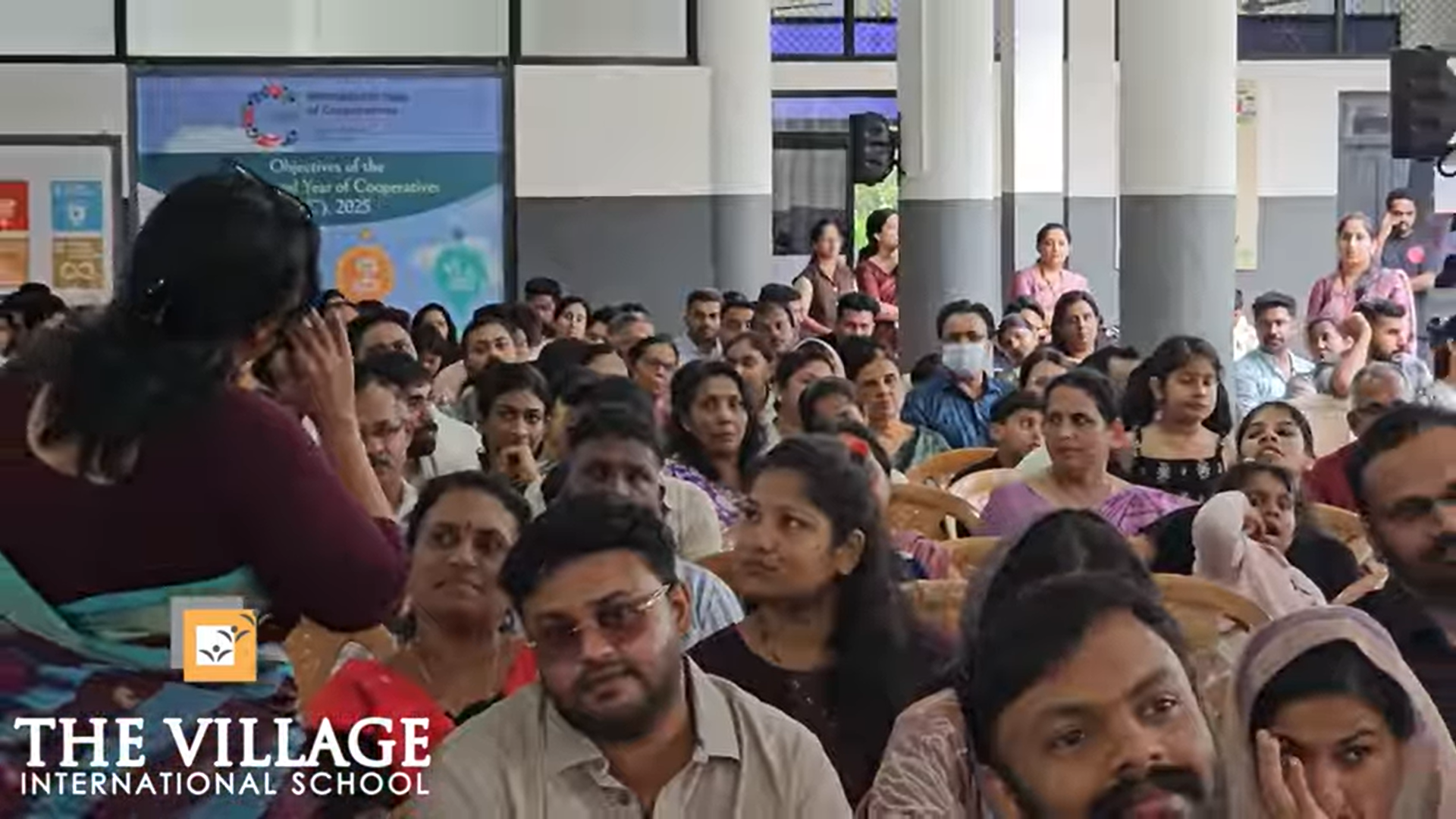
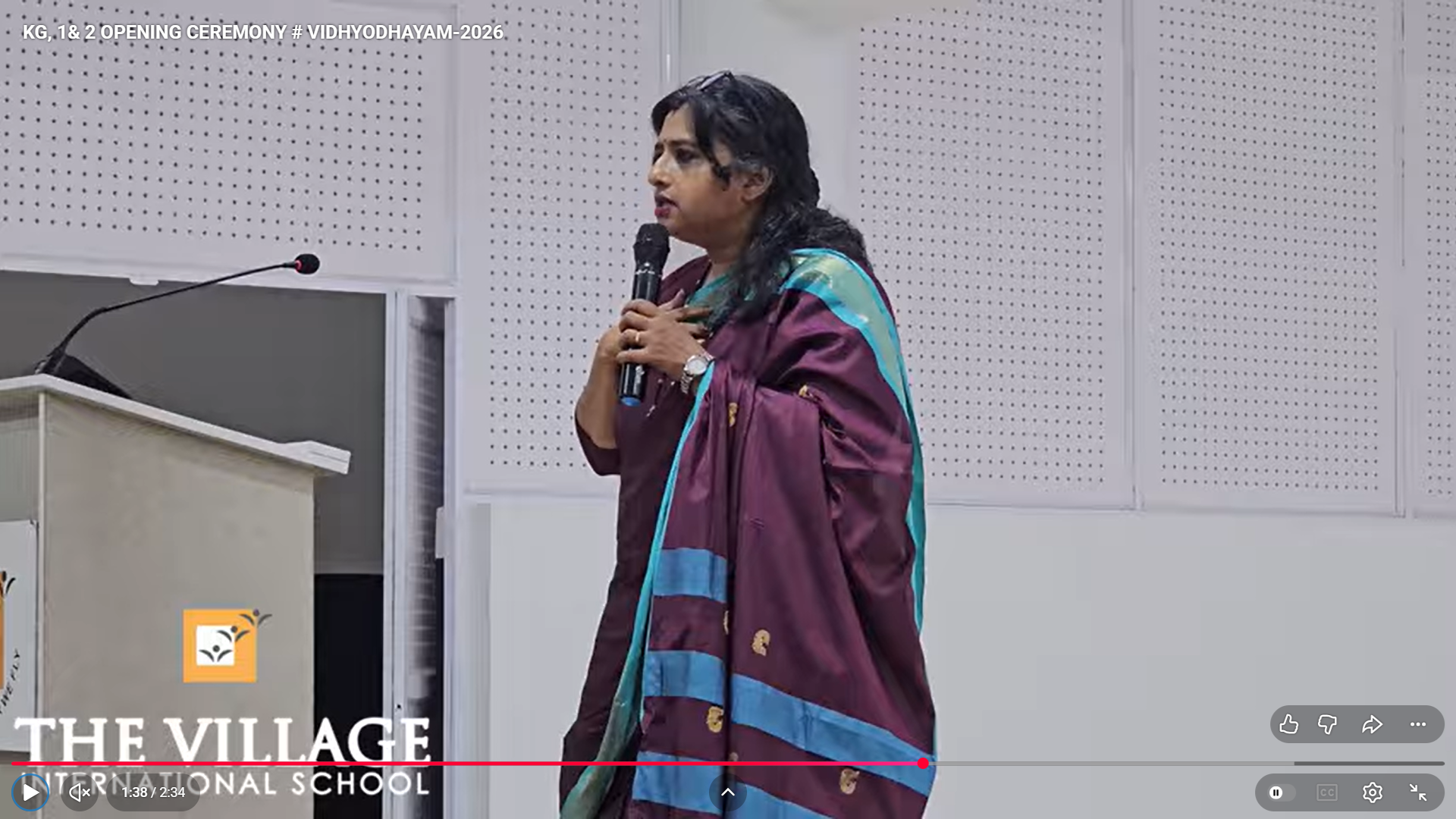
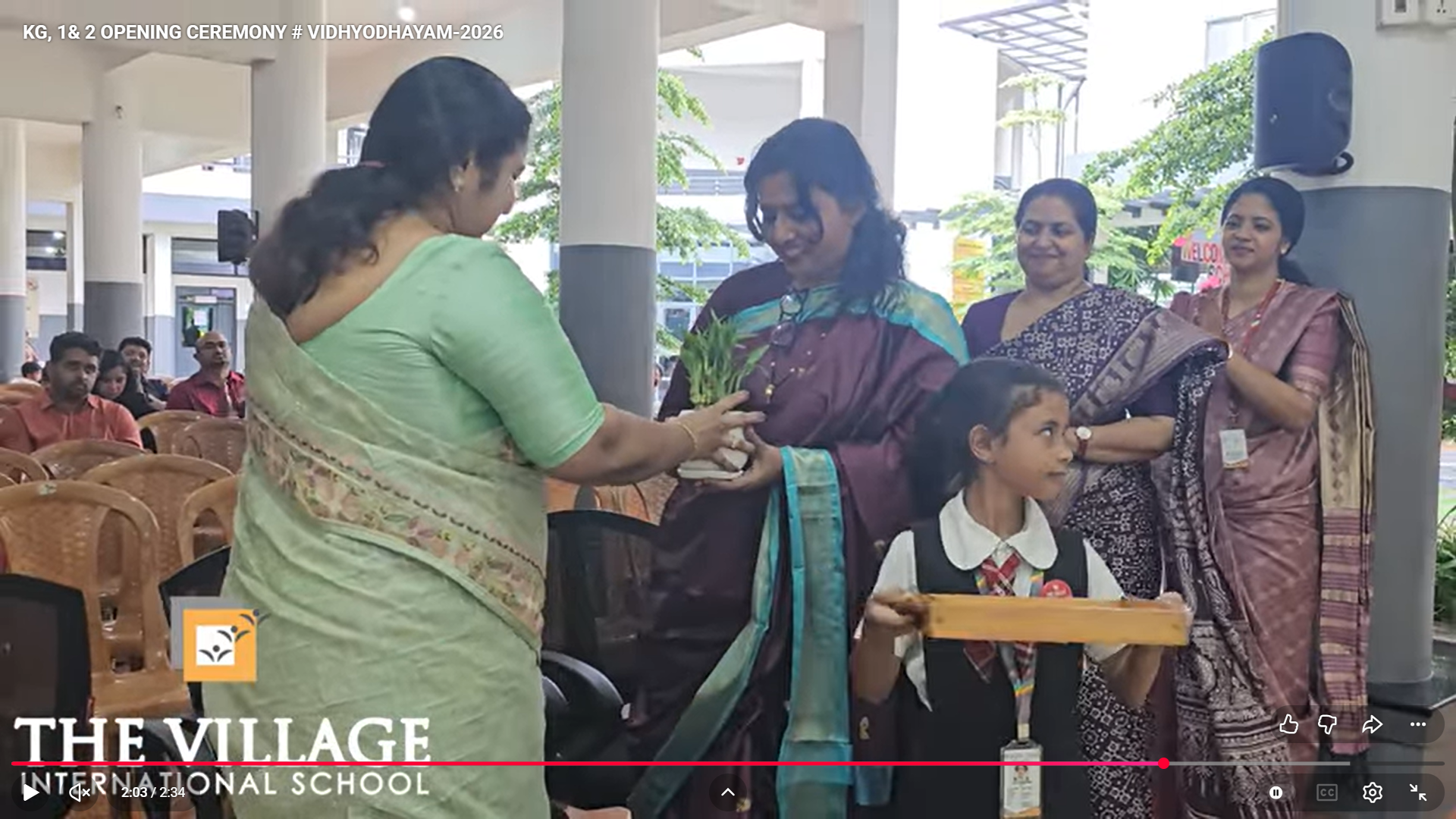
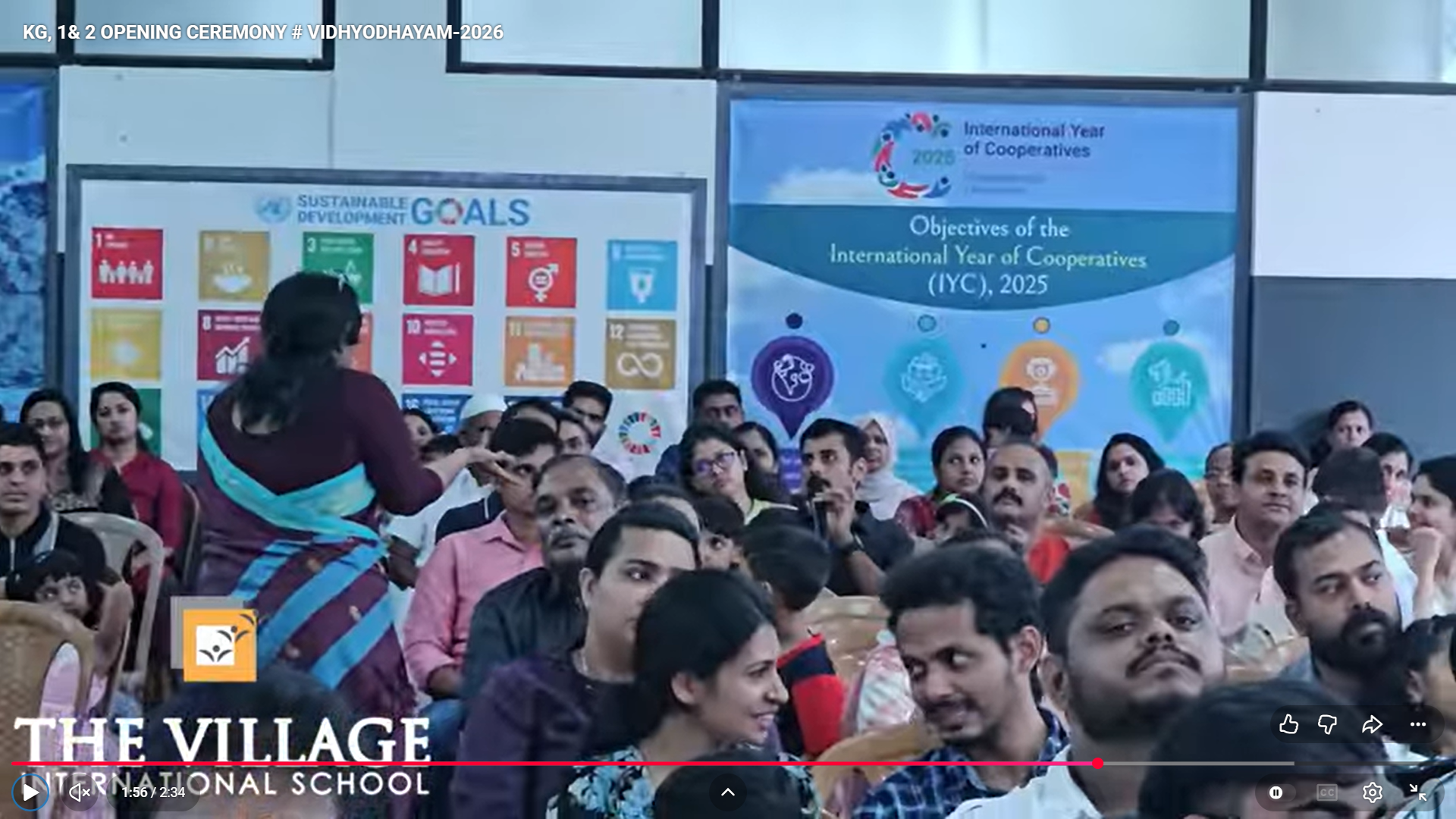
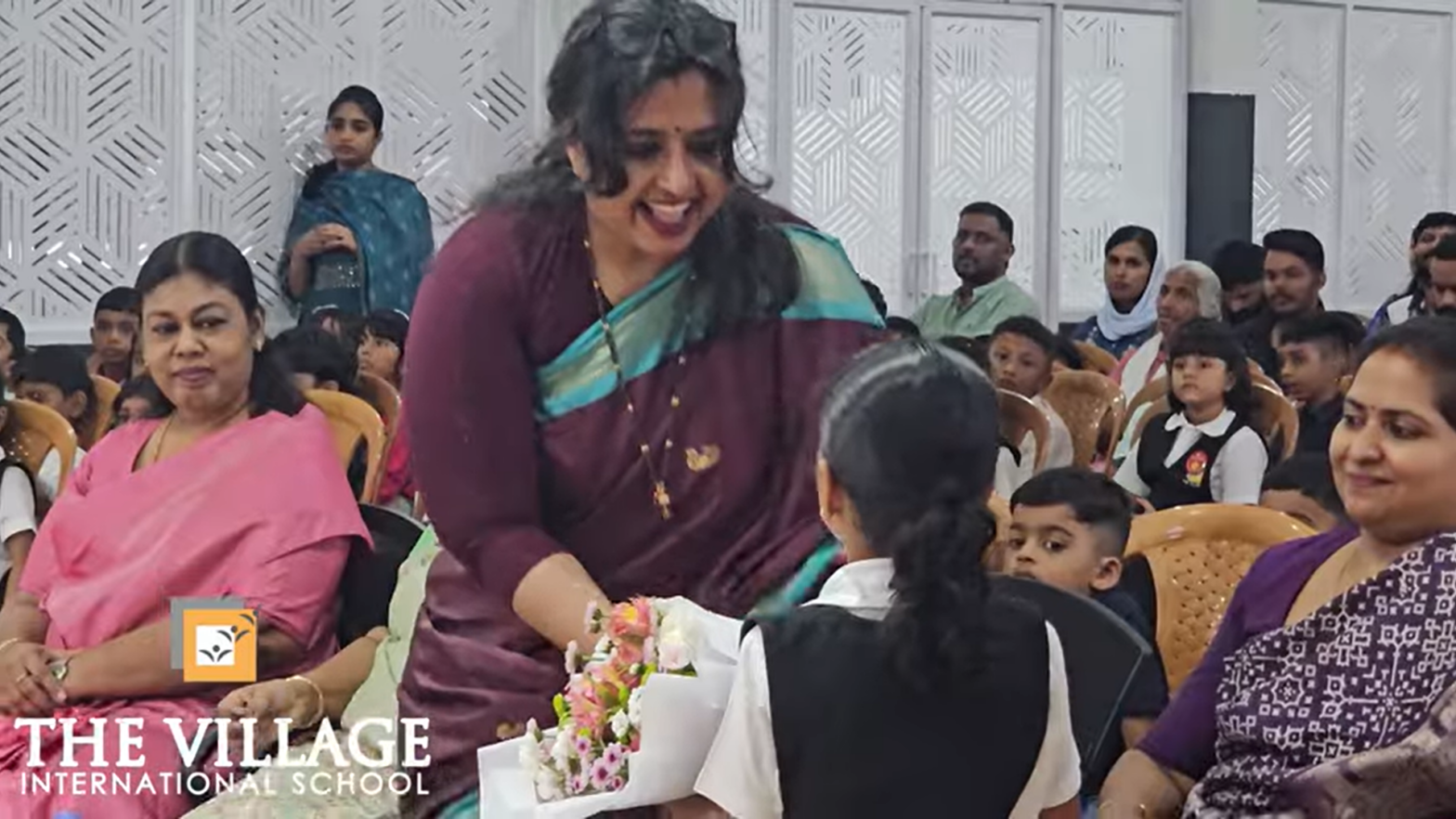
It takes immense effort, energy, and intention to look inward and observe how our internal world reacts to the children in our care. On a recent Monday morning, the hall at The Village International School Thodupuzha was packed with parents and grandparents, all giving their full attention to understanding emotional growth and development.
A school that prioritizes this level of inner work is a reflection of its leadership. Principal Mrs. Saji Varghese recognizing the impact of the SPACE framework at Rajagiri and immediately wanting to facilitate that exact same reflective space for his own school's parents is the hallmark of a truly great leader. It demonstrates a profound commitment not just to academics, but to the holistic, emotional wellbeing of the entire school community.
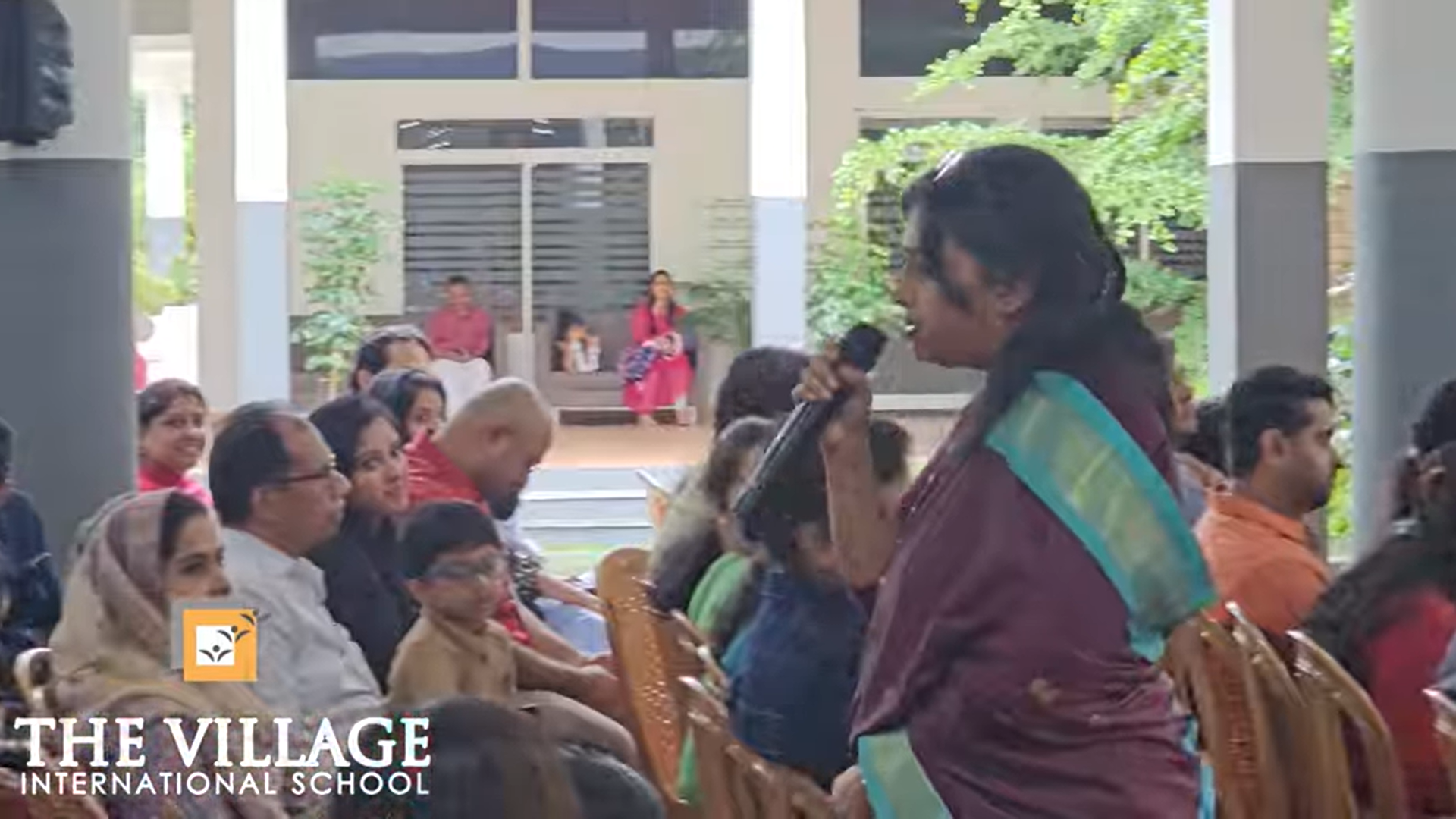
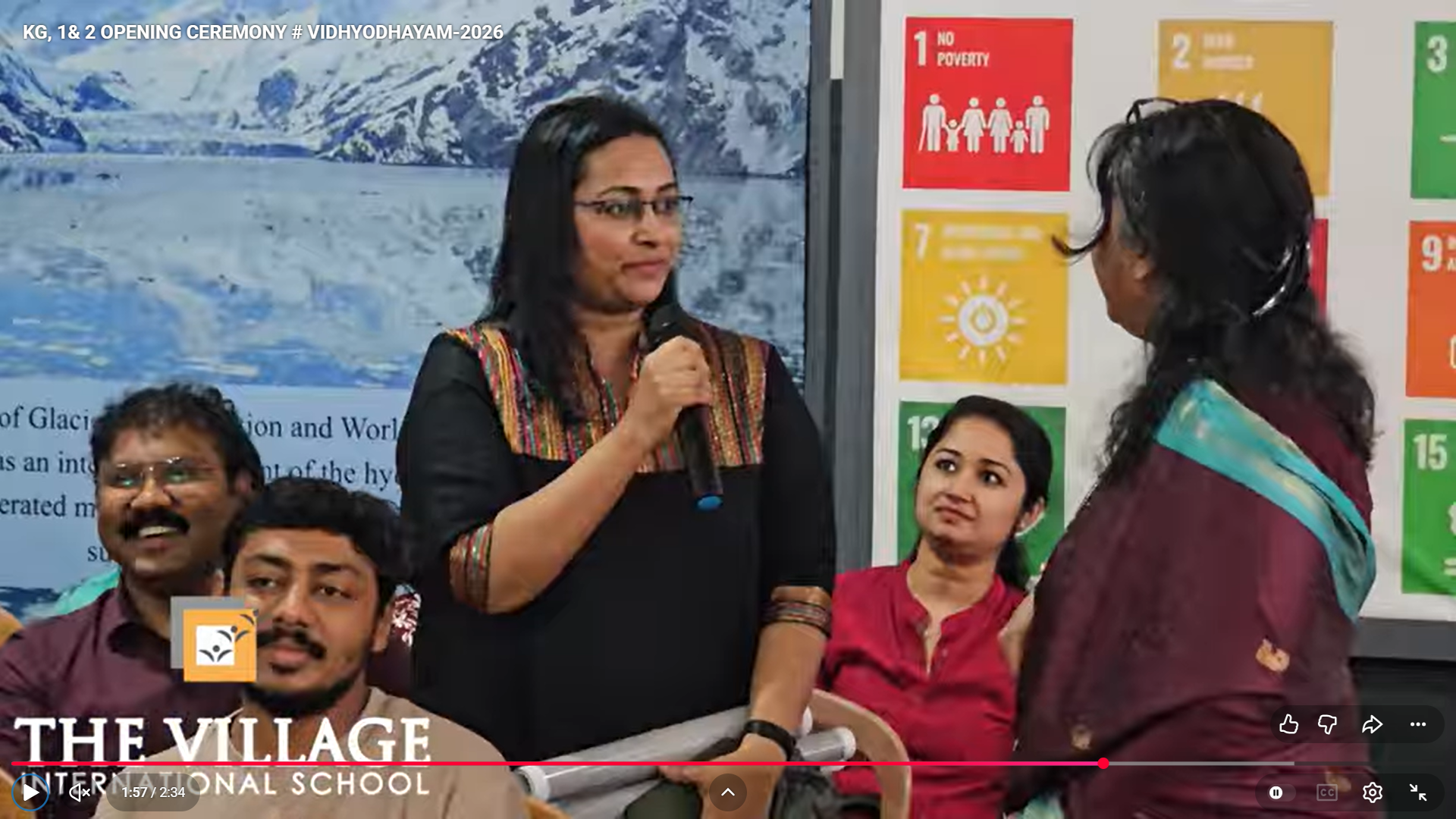
We often gauge the impact of these sessions by the questions asked, but this time, the true impact surfaced when I flipped the script. I asked the audience questions, and the engagement in their answers was incredible. It was fascinating to see how different elements of emotional regulation resonated with each person:
Whole-Body Emotions: One father shared a powerful realization that his daughter expresses emotions with her entire body. Understanding this physiological connection was new to him, and he noted he would now take care to hold her closer and anchor her body before rushing into logic, reason, or distraction.
The Power of Co-Creation: A mother shared how crucial it is to just let children release their emotions first, and only then co-create a solution. She noted the shift from the adult merely instructing what to do,while the child listens passively, to actually engaging them in the process.
The interactive phase also brought up poignant, everyday realities. A father asked a thoughtful question about the timeline for transitioning a child to sleep separately from their parents.
Another highly relatable discussion centered on the pull of gadgets. When both parents are working, children often reach home from school before they do, leaving grandparents as the primary caregivers. It is completely understandable why screens become a tool to manage the afternoon. They keep a child hooked and engaged—that is exactly what a game is designed to do.
It can feel exciting for a grandparent to see a child seemingly learning faster on a device, but it is vital to understand the difference between machine learning and human learning.
| Learning Environment | The Process | The Impact on the Brain |
| Machine Learning (Gadgets) | The input and output are identical every time. A song on an app plays the exact same way on repeat. | Creates rigid loops. The brain gets hooked on predictable, instant stimulation without having to adapt. |
| Human Learning (Real World) | The environment is dynamic. If a human sings a song, the pitch, tone, and tempo change slightly every time. If a child plays with physical blocks, they don't start at "level 1" the exact same way twice. | Fosters flexible, adaptable learning. The brain learns to process diverse outputs to the same input, building true cognitive resilience. |
We must contextualize why this work is so critical right now. Kerala is widely celebrated for having the highest literacy rate in the country. Yet, alongside this academic achievement, we are also leading in the number of deaths by suicide among school children.
This tragic reality demands that we ask ourselves: How can we start early? How can we allow our children to have a safe space to say whatever they are thinking and feeling without fearing punishment, judgment, or dismissal?
The answer is that we must start in preschool itself.
Our instant, socially conditioned reaction to any expression of emotion other than happiness is often a rapid-fire dismissal: "Don't cry," "Don't be afraid," "Don't be angry," or "Don't think like that." We act as though a child voicing discomfort means we must instantly force them back into comfort.
Listening does not mean agreeing. It does not mean doing whatever the child says or giving into a demand. It simply means allowing them to get the emotion out of their body so they feel seen and safe.
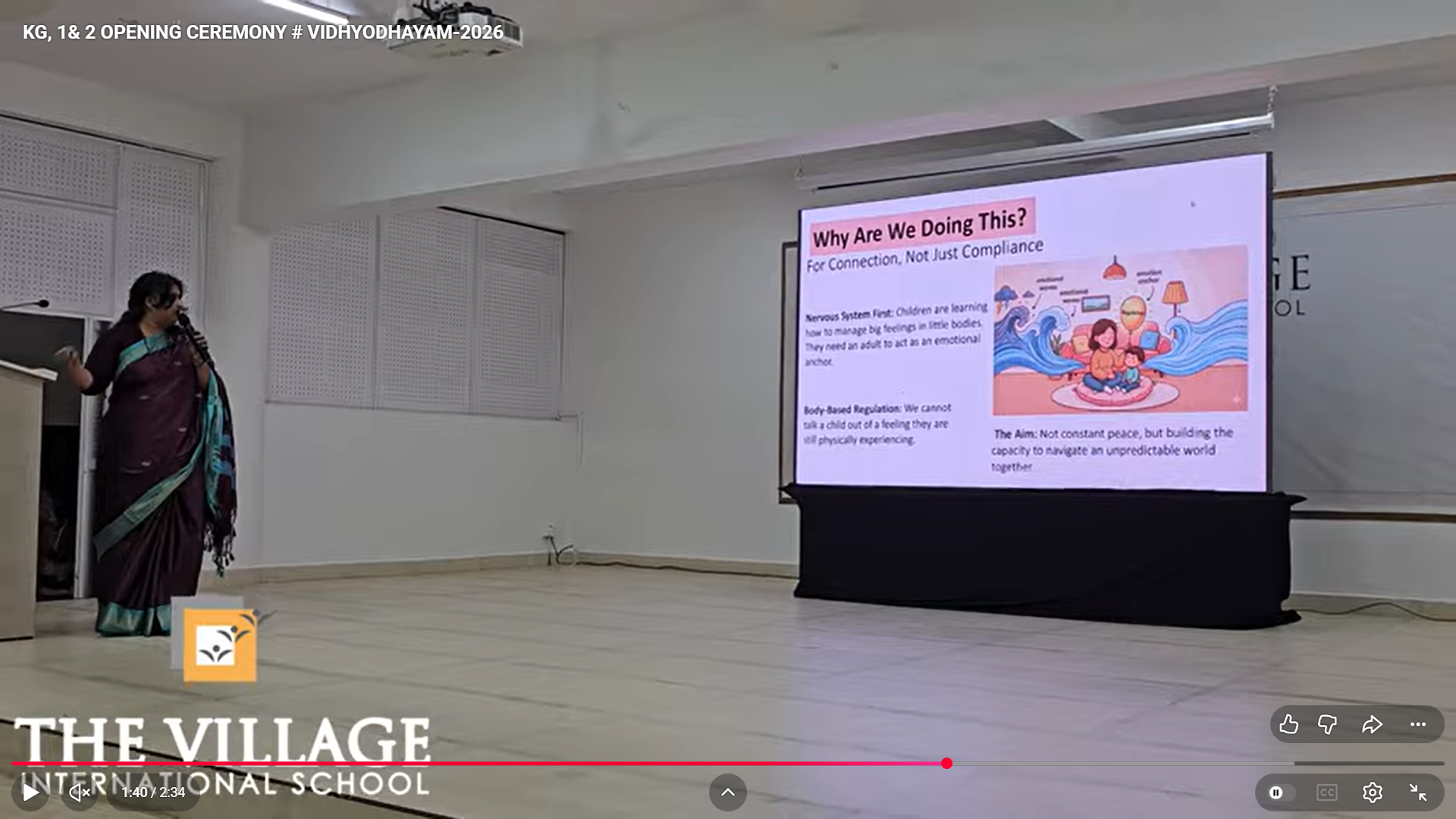
When we rush to fix, silence, or shut down a feeling, we risk further dysregulating their nervous system. If we do not do the work of holding space for emotional growth, we face several critical risks:
Internal Shutdowns: Children might mask their true feelings, leading to underlying anxiety or profound loneliness.
Escalation: The urgency to "fix" a feeling quickly can accidentally dysregulate the nervous system further, making the meltdown more intense.
Missed Opportunities: We miss the chance to understand the unmet need driving the expression in the first place.
By stepping away from the urge to be a "firefighter" extinguishing a blaze, and instead becoming a "gardener" tending to growth , we build the capacity to navigate an unpredictable world together. Thank you to The Village International School for fostering such a vital space for connection.
