Government Law College, Ernakulam
August 4, 2025
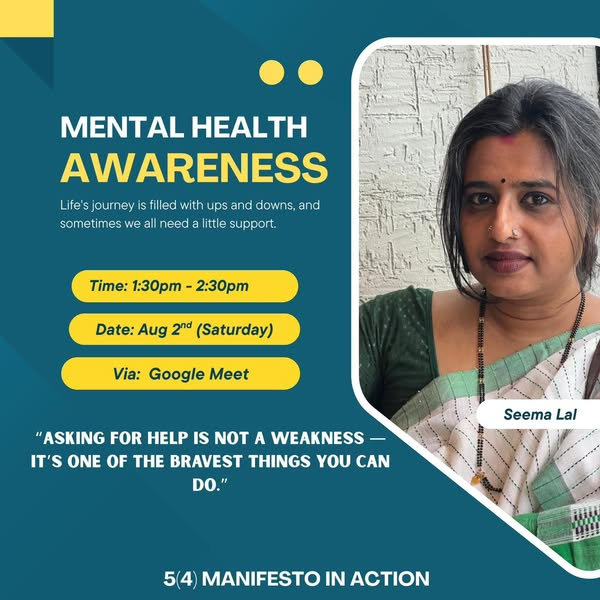
Most mental health sessions in colleges happen because they’re required, a check box to tick off. Someone is called in, slides are shown, nods are exchanged, and we move on. But every now and then, something different happens.
At Government Law College, Ernakulam, it was one such moment. The difference? Not the format or content, but the quality of engagement. When students ask questions that go beyond the surface, you know they’re not just attending, they’re present.
These are some of the questions they asked:
-How do I support a friend who’s clearly burning out but won’t open up?
-Why is therapy still such a taboo at home even when we know we need it?
-We see so many self-love posts about loving your own company, but I go to movies alone, eat lunch alone, and still don’t feel okay. Why?
-If I already know my friend is sad, isn’t it better to just tell them that instead of sugar-coating or cheering them up?
-And how does validation even work if the other person isn’t moving toward a solution?
These aren’t just questions. They’re truths people are living. In response, I shared the RESTORE framework, a guide not only for mental well-being but also rooted in the values of justice and emotional clarity.
#R ecognize distress: like building a legal case, you can't advocate until you’ve understood the facts, including the silences.
#E liminate stigma: just as laws must evolve, so must our language around mental health. Replace “Are you okay?” with “How are you coping these days?”
#S trength is seeking help: junior lawyers consult seniors. Reaching out is not weakness, it’s wisdom.
#T alk about the unspoken: hidden burdens, like mental health struggles, deserve voice, just as unseen evidence still matters in court.
#O ffer peer support: you don't need to be the judge or the solution. Just be the amicus curiae, the friend who shows up and stays.
#R eclaim emotional language: rights not expressed are rights not exercised. Learn to say “I feel anxious” instead of “I’m just tired.”
#E stablish daily tools: tiny habits like breathing, stillness, saying no,these are your legal safeguards before burnout becomes a breakdown.
The legal system talks of rights, remedies, and restitution. But what if the role of both legal and mental health systems is not just to react, but to restore?
Restore dignity over judgment.
Restore dialogue over silence.
Restore healing over hiding.
Because if the law gives people the right to dignity, mental health gives them the tools to live it. Let’s not just fight for justice. Let’s work to restore it.

