
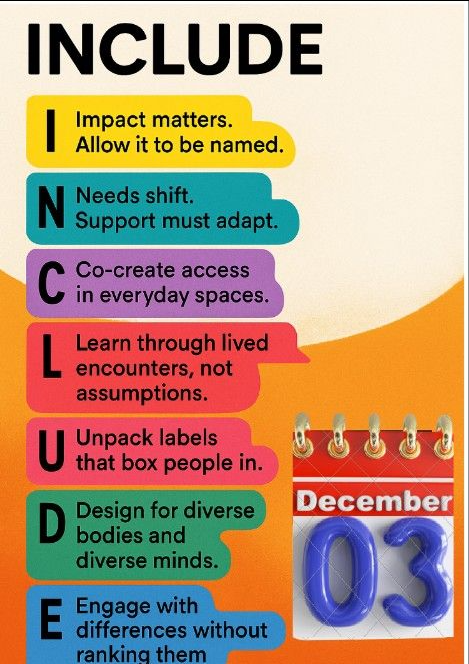
#unpopulartake #IDD #dec3 There is a constant push to fit into a “neurotypical” frame even when that frame doesn’t match how many of us learn, work, relate, or cope. And if we don’t fit that template neatly, the world quickly sorts us into the next box, disabled, disordered, disruptive, difficult. As if these labels tell the whole story. What rarely gets named is how every person carries gaps. A knowledge gap when something hasn’t been learned yet. A skill gap when practice hasn’t happened yet. A support gap when access and safety are missing. These gaps widen for people facing layered vulnerability, poverty, caste, gender, language barriers, trauma histories, migration, unstable housing, chronic illnesses, legal uncertainties, overloaded caregiving roles. These layers make learning slower, rest scarce, support harder to reach, and inclusion inconsistent. And when something has never impacted us personally, it is naturally harder to understand. That doesn’t make anyone uncaring. It simply reflects how humans notice what touches their own lives first. Understanding grows from contact, not from theory. Look around daily life and these patterns show up everywhere. A child with sensory overwhelm labelled “stubborn” at home. A colleague who needs written instructions but gets called “slow.” A parent who needs support but hides it because help has been turned into something to qualify for. An autism programme with no mobility access. A mobility-focused event without sign language or visual guides. A school that celebrates inclusion day but refuses admission to a child because they “can’t cope.” A community space that claims to be accessible but forgets ramps, captions, plain language, or sensory-safe corners. Each one is a reminder that labels don’t guarantee inclusion; behaviour and design do. Impact also needs space. The way something lands matters. “This felt harsh,” “this was too much,” “this left me out.” These are not accusations; they are information. And no label removes someone’s responsibility to acknowledge how their behaviour affected another person. Being autistic doesn’t cancel impact. Being anxious doesn’t cancel impact. Being non-diagnosed doesn’t cancel impact. Labels inform needs, not accountability. At the same time, nobody needs a diagnostic label to say: this overwhelmed me, this hurt, this didn’t work for me. Lived experience is valid on its own. Maybe the shift we need is simple. Instead of deciding who is “eligible” for support, we see support as something everyone needs in different ways at different stages. Instead of treating gaps as deficits, we recognise them as part of being human. Instead of policing intention, we take impact seriously and repair when needed. Inclusion begins in small places, within oneself first , within families, homes, classrooms, WhatsApp groups, teams, friendships, community rooms. If we can practise it there, it becomes possible everywhere else.
