Masking
October 18, 2025
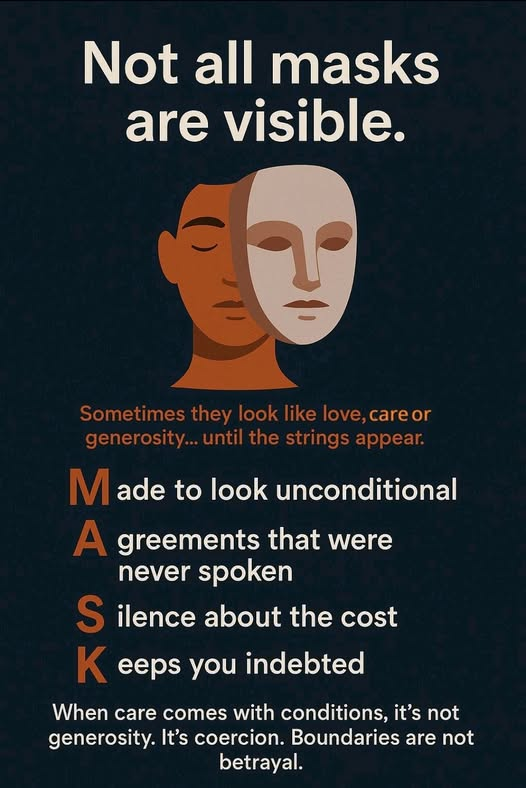
#Masking gets talked about a lot when we speak of neurodivergence. But masks have always had multiple meanings. They can exaggerate expression. They can conceal intent. They can protect or deceive. And then there’s the quietest one of all, the mask of “service.”
The one that pretends to be unconditional but actually has strings attached. Not written. Not spoken. Just implied. And if you don’t comply, you suddenly become ungrateful, disloyal, arrogant, selfish, bad.
Often, this begins in our closest relationships. Parents who buy things for their children and quietly expect gratitude in return. Or the “we did everything for you” narrative, as if children asked to be born. Was that parenting freely chosen, or was it a deal with an invisible contract for care in old age or on condition of gratitude and obedience?
When we blur that line, children can’t always tell the difference between genuine love and grooming. The trusted adult who gives chocolates and hugs, then one day asks for “just a small favour.” A child may not know how to say no. Because haven’t they been taught that every gift comes with an unspoken cost?
This pattern echoes in friendships too. A friend shows up for you countless times. Then, when circumstances stop you from reciprocating, the word “no” gets painted as betrayal. Did they help to help, or to tally up favors owed?
It happens in workplaces. In community. In intimate partnerships. Someone offers you a “free” job lead, a service, a place to stay. Later, they cash it in with demands you never consented to. And if you don’t agree, they throw the ledger in your face. “After all I did for you…”
Here’s the hard truth: if someone expects repayment for a so-called unconditional offer, that’s not generosity. That’s a transaction you never consented to. And when they list every single thing they’ve done the moment you set a boundary, that’s gaslighting. That’s emotional and psychological violence.
Shared responsibility is built on clarity and agreement in advance. It is not: “I bought you clothes, so now you cook and clean toilets.” That’s not partnership, that’s coercion. Real responsibility means negotiating needs, limits, and roles upfront, whether it’s marriage, work, childcare, or even the offer of a chocolate bar.
The litmus test is simple: when you say no, does the other person respect it, or punish you for it? If the answer is the latter, the mask just slipped. And if someone gets angry when you hold your boundaries, maybe those boundaries are exactly what protect you most.

