Open Conversations ; lovely team at Seraphic Therapy Centre.
July 11, 2025
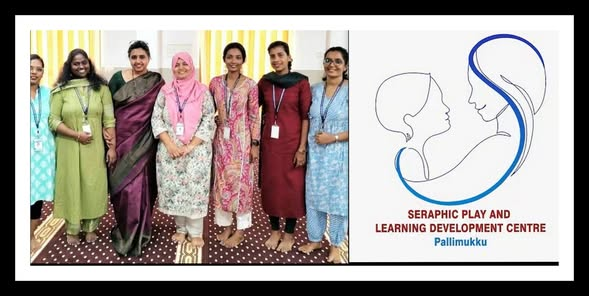
Yet another reflective conversation with
Razina Aziz and her lovely team at Seraphic Therapy Centre. What stood out was not just the commitment to supporting children with diverse needs, but the courage to pause, question, and reimagine everyday practices with care and depth.
These conversations were not about finding quick fixes. They were about slowing down, noticing what we might be missing, and shifting from behaviour management to relationship-based, body-informed support.
Here are some reflections we explored, shared now in honour of the Seraphic team, and for any professional working with children and families:
1. Start with the Nervous System, Not the Behaviour
Instead of asking “How do I make this child listen?”, we ask:
• Is the child feeling safe in this moment?
• Is there a felt sense of connection?
When safety and connection are in place, learning and participation often follow, not as compliance, but as a natural extension of trust.
2. Progress is Not Always Linear
A child who connected yesterday might withdraw today. That isn’t regression. It’s the nervous system signalling a need to recalibrate. Each time we respond with co-regulation, we are not starting over, we are deepening trust.
3. Co-Regulation Over Correction
When a child is overwhelmed, what helps is not more instruction, but a steady, regulated presence. Some ways to offer co-regulation:
• Model slow breathing without demanding it.
• Offer a calm presence without insisting on interaction.
• Gently mirror the child’s rhythm, actions, or pace as an invitation to connect.
4. Safety is Felt, Not Assumed
A space can be physically safe and still feel overwhelming to a child. Sensory overload, unpredictability, or emotional disconnect can create a sense of unsafety that words alone cannot fix. Understanding this helps us shift from “What’s wrong with this child?” to “What might this child be experiencing right now?”
5. Pause Before Setting Goals
We ask:
• Whose goal is this?
• Is it aligned with the child’s and family’s daily realities?
• Are we honouring emotional and sensory needs, not just academic milestones?
Real progress is not about ticking developmental boxes. It’s about building capacity for connection, communication, and co-regulation.
6. Offer Calm, Don’t Demand It
Breath, rhythm, and presence are tools we can model, not just to soothe, but to offer anchoring support in moments of overwhelm. Think of it as holding an umbrella in the rain. We can’t stop the storm, but we can stay present through it.
In a field that often pushes for speed and standardisation, the Seraphic team chose reflection, relationship, and rhythm. And that, to me, is the heart of truly child-centred work.
Thank you, Razina, for holding space not just for children, but also for professionals to unlearn, reimagine, and return to what really matters.
This kind of partnership reminds us that therapy is not just about tools, it’s about how we show up. For those working with children with diverse needs: may we continue to choose presence over pressure, and attunement over urgency.

