OPEN CONVERSATIONS with GEMS MODERN ACADEMCY
May 29, 2025
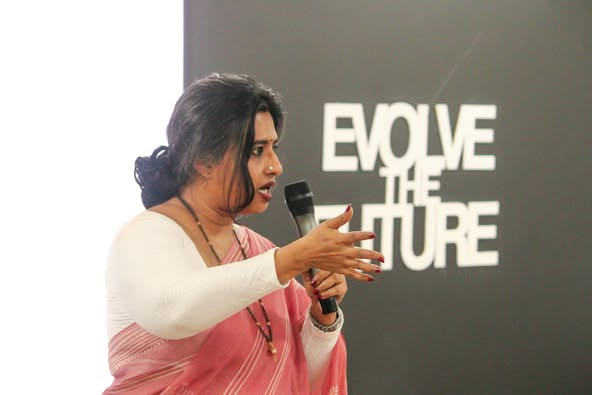
Co-creating Knowledge. Strengthening Skills. Building Support.
The recent
Open Conversation with close to 130 educators from Pre-KG to Grade 12 at GEMS Modern Academy became a space of rare honesty , the kind that moves us forward.
We began with what we knew, the right terms, the textbook understanding of neurodiversity, inclusion, perspective, and safety. But like many teenagers today, having the right words doesn’t always mean we know how to live them.
Real learning began the moment we moved from “what we say” to “how we feel” ,especially when practicing inclusion in real classrooms.
"I feel exhausted."
"I don’t know if I’m making a difference."
"One day is amazing, the next feels like failure."
"How do I even measure success?"
These weren’t complaints, they were courageous truths. Because masking isn’t just a neurodivergent trait. All of us mask when we fear judgment or dismissal. It takes immense safety to say, “I don’t know”, “I can’t”, or “I need help.”
We saw firsthand how fast the body reacts under pressure, when a teacher was randomly called to stand in front of 130 peers. Her laughter masked the tight chest, the nerves, the unspoken “Why me?”
And that moment? It mirrored exactly what a child goes through when put on the spot.
We say “stand and answer” , but they’re just trying to stay standing.
The nervous system doesn't wait for permission , it speaks first.
That’s why inclusion begins not in policies or posters, but in the felt sense of safety in the room
We cannot talk inclusion without allowing teachers to voice the hard parts.
We cannot teach children to ask for help if we don’t model asking ourselves.
We cannot expect regulation without support.
So what did we really learn in that short 90 minutes?
How to ask for help
How to listen deeper when someone does
How to break down the “ask” into something simple, clear, and achievable
That inclusion is not easy,and we don’t need to pretend it is.
It takes honesty, co-creation, and community, not individual heroics.
Deep thanks to GEMS and Soumya from the Inclusion Department for making this possible.
And a personal note: this is the same school that once denied my own son’s admission, assuming his limitations before even meeting him. While that sting remains, as it would for any parent, it was also deeply meaningful to return after three years, not in bitterness, but in dialogue.
To say: "Don't assume. Ask more questions."
Because assume makes an 'ass' of 'u' and 'me'
We don't need to have all the answers. But we do need to keep asking, listening, and learning, together.

