
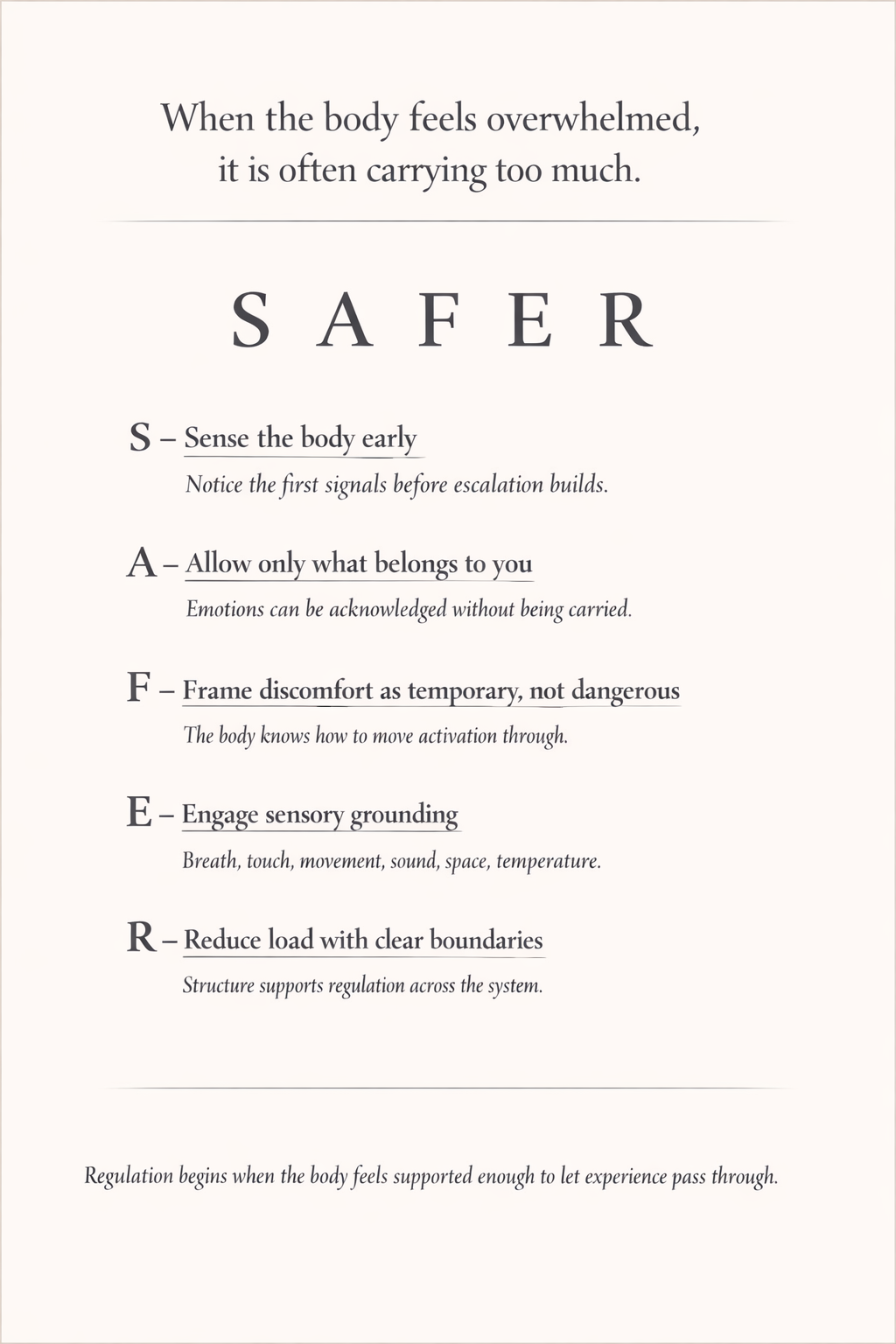
In sessions, this is something I see often. People come in naming panic, anxiety, or sudden overwhelm. As we slow the pace and listen to the body, what becomes visible is not fear alone. It is load. Emotional load. Sensory load. Relational load. What the body is holding is rarely a single feeling. It is layers of expectations, unspoken needs, repeated demands, unresolved interactions, noise, and pressure arriving faster than the nervous system can process. Each layer may seem manageable on its own. Together, they exceed capacity. The body responds before language does. Dizziness. Tightness. A sense of instability. This is not fragility. It is the nervous system communicating overload. A pattern that appears frequently is the absorption of emotions that do not belong to the self. Discomfort in others gets prioritised. Disagreement feels unsafe. Needs get postponed to keep the environment steady. Over time, the body becomes the place where everything collects. Regulation is not about pushing through, avoiding, or enduring discomfort. It is about sitting with discomfort without reading it as threat, while supporting the body to move through it. Body-based and sensory grounding create that support. Reducing input. Creating structure. Shifting space. Anchoring attention in breath, pressure, movement, or temperature. When the body is supported, discomfort passes through instead of getting stored. And when load is reduced through clear limits, regulation becomes possible not just for one person, but across the system around them. #MakingLivedExperiencesMatter #OpenConversations
