the real chains
August 15, 2025
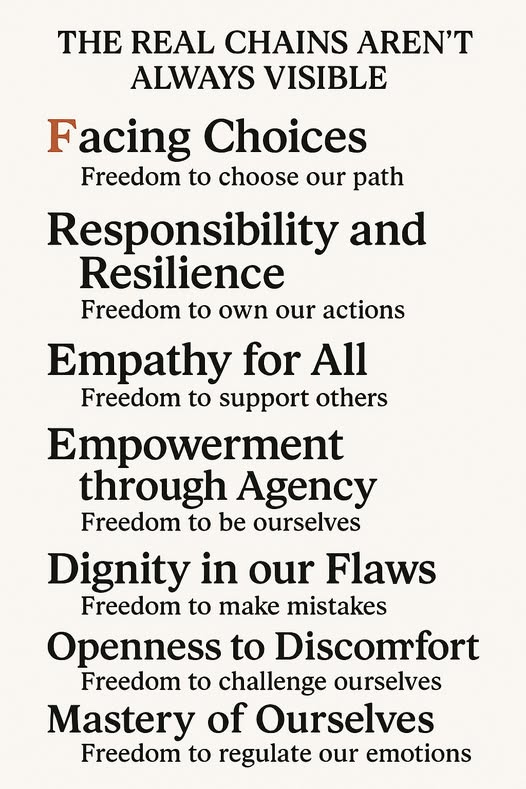
the real chains aren’t always visible. And they're not what you think.
F - Facing Choices. Freedom is not the absence of consequences. It's the freedom to make choices, including those that lead to a different outcome than expected, and to face the results with self-compassion. For example, a student who is dealing with burnout chooses to prioritize rest over an exam. They are exercising the freedom to choose what they need, and their liberty is in accepting the outcome without shame, knowing they did their best with the resources they had.
R - Responsibility and Resilience. Freedom is not the ability to act without consequence. It's the responsibility to choose our words with care and the resilience to repair relationships when we cause harm. It's also the profound freedom to say no. For instance, a person has the freedom to politely decline a new work project when they know they are already at their capacity, without guilt.
E - Empathy for All. Freedom is not a solitary journey. Our liberty is tied to the liberation of others. It’s the empathetic act of pausing and asking, “How/Can I help you?” For example, you see someone struggling to open a door while using a cane. The freedom is in offering support, recognizing that not all barriers are visible, and doing so in a way that respects their dignity and agency.
E - Empowerment through Agency. Freedom is not about having power over others. It's about using our own agency to empower them. It's the parent who gives their neurodivergent child the space to choose an activity that supports their unique needs, like choosing a sensory-friendly art class over a competitive sport. This is an act of empowerment that says, "Your way of being is valid, and you have the freedom to be yourself."
D - Dignity in our Flaws. Freedom is not the state of being flawless. It is the dignity to own our mistakes with grace, especially in a world that so often uses mistakes to dehumanize us. For instance, a manager admits an error on a team project. They are demonstrating true freedom because they understand their worth is not tied to being perfect, but to being a human who learns and grows.
O - Openness to Discomfort. Freedom is not an endless state of comfort. It's the courage to embrace the discomfort of growth and to lean into difficult conversations about power imbalances. For example, choosing to attend a workshop on historical inequities or a town hall on a challenging community issue, and truly listening, is an act of freedom because it shows a willingness to grow.
M - Mastery of Ourselves. The ultimate freedom is not being in control of others or our circumstances. It’s about mastering our own internal world. For instance, when you see upsetting news, the freedom is in taking a moment to breathe before you react. It’s the choice to respond with intention rather than impulsively, demonstrating a profound internal mastery.
What small act of freedom are you practicing today?

